By James Wakahiu
University dons from Mount Kenya University (MKU) request the government and institutions of higher learning communities to give priority to physically challenged students in learning institutions.

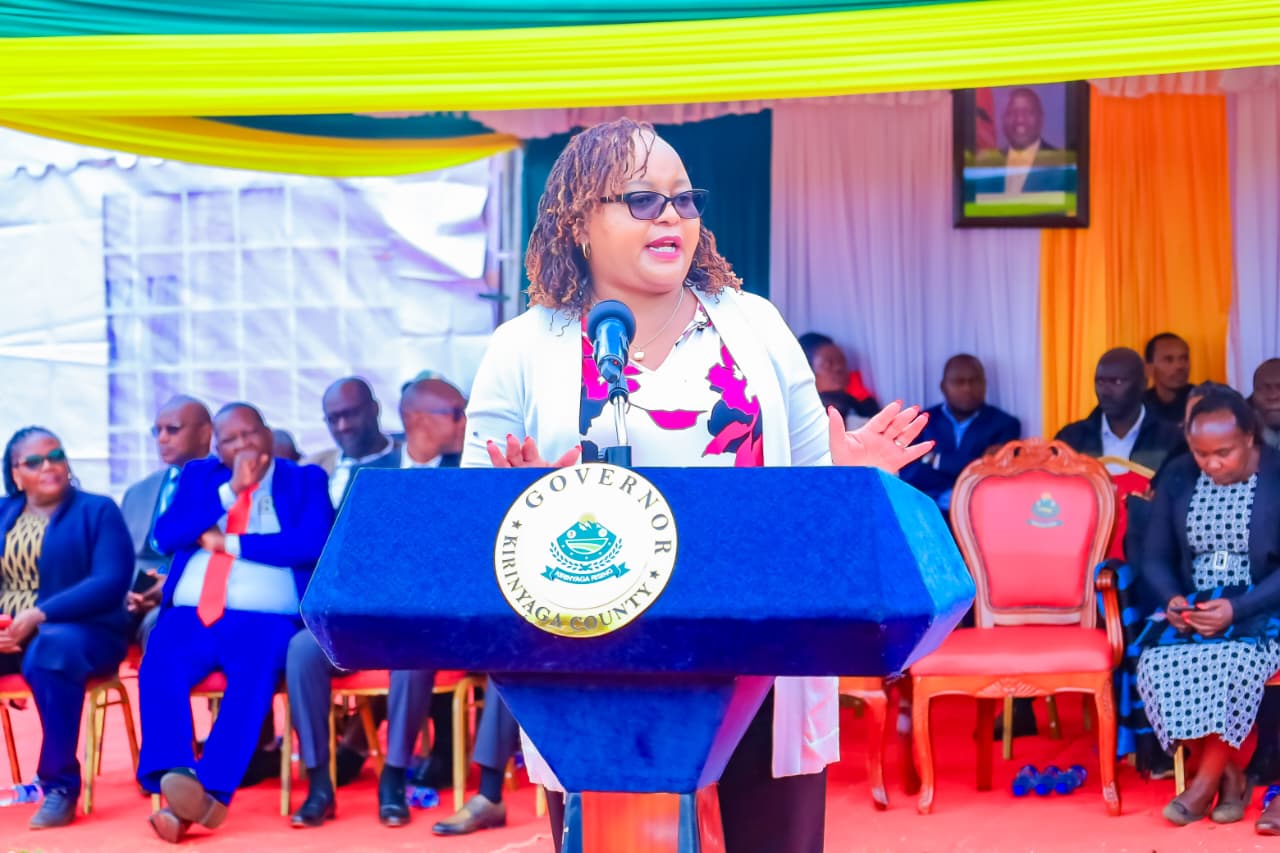
Photo/Dr. Jane Nyutu{L} with Dr. Sarah Kimaru. Photo. By James Wakahiu
“It takes a fearless and an overcoming spirit for a child to transit from primary, secondary and eventually to Higher Education Institutions. It calls for one to overcome all odds, stereotypes, rejection, insults, and nicknames just to mention a few,” says Dr Serah Kimaru, Dean -School of Social Sciences and the Coordinator of PWDs union at MKU.
“My experience as coordinator in charge of the docket that takes care of students living with disabilities at the university has made me realize that any child abled differently that has completed their primary course is a hero. Society is responsible for disabling people living with a disability. People with disabilities are not disabled; it is the society that is disabled and the process disabling them. ,” she says.
Dr. Jane Nyutu, Director of Mind and Beyond Counselling Centre, observes that feelings of being a burden to the society might throw victims into depressive and suicidal thoughts and if not addressed, the victims might actualize. “Societal support and family love are vital to everyone’s identity,” says the co-founder of MKU.
“The support to people living with a disability is also vital in enhancing their self–acceptance. These basics will go a long way in helping them rise beyond disability,” added Dr Nyutu.
The two now want the government and individuals to ensure easy access in public spaces, businesses and promote equal employment opportunities where everybody has a chance to reach their full potential. “Collectively, the society should demystify myths, attitudes and perceptions to improve human experience of everyone where everyone feels a sense of belonging. By doing this the spirit of our constitution will have more meaning to the entire society,” they said.
They spoke during an interview on a local TVstation, the TV47’s Saturday evening’s programme christened Beyond the Limit. “A person with any disability is entitled to be treated with dignity and respect and be addressed and referred to in a manner that is not demeaning.” This is the opening statement among others in article 54 of Kenya’s Supreme Law – the Constitution 2010,” said Dr Kimaru.
Disability can occur due to congenital defects before or during birth, while acquired disability can happen at any stage of someone’s life. Human life is surrounded by constant danger meaning we are disability candidates. “These facts are stubborn and painful but that is the nature of realities to humans and they mostly do not conform to human expectations. Knowledge about disability implores our rationality to open our minds to what is really beyond our control rather than to succumb to our irrational emotions,” added the varsity don.
Dr Kimaru is herself the mother of a physically challenged girl. “My 21-year old daughter suffers cerebral palsy as a result of a complication due to midwife’s negligence as he was asleep during my delivery. Like any other parent, I was bitter and wanted to spend the rest of my life blaming someone—we all do. However, I choose a brave step, accepting the things I cannot change, changing what I can and above all seeking God to provide me knowledge to differentiate the two,” she said in a different forum.
MKU is spearheading community support to the physically challenged persons in all its campuses. The university has invested in necessary infrastructure and policies to support the differently abled persons and accord them equal opportunities. These include allowing the students with disabilities to be served first in the offices that require students to queue and giving them first priority when they need to access elevators in the university premises.
Dr Kimaru has called for students with visual and physical disability to be supported when climbing staircases. “The security should serve the students with disabilities first when they seek to gain access to the institution so that they are not strained. The security should ensure that the lifts are opened in advance so that students who can only use them are not inconvenienced,” she adds.
In lecture halls, fellow students should allow the visually- impaired students who use braille machines and those using wheelchairs to sit in front of the class and to get chairs ready for them to sit on. The lecturers and class representatives’ roles are to ensure that the students who are in need of extra support are assisted and made comfortable while in class.
While roommates of students with visual impairment are expected to assist them in performing some tasks such as washing clothes, catering staff should allow the normal students to serve food to the students with disabilities. “The university fraternity has to learn to pave the way for students with visual and physical impairment more so those on wheelchairs and those using crutches,” she adds.
Staff and visitors who are abled differently are also considered in the inclusion in service delivery. Recently, MKU has witnessed an increased number of persons with disabilities going for elective positions in student organisations such as MKUSA (MKU Student’s Association).
MKU is a member of United Nation Academic Impact and currently the UNAI hub on Strategic Development goal SDG 10 on reduced inequalities.
www.themountainjournal.co.ke