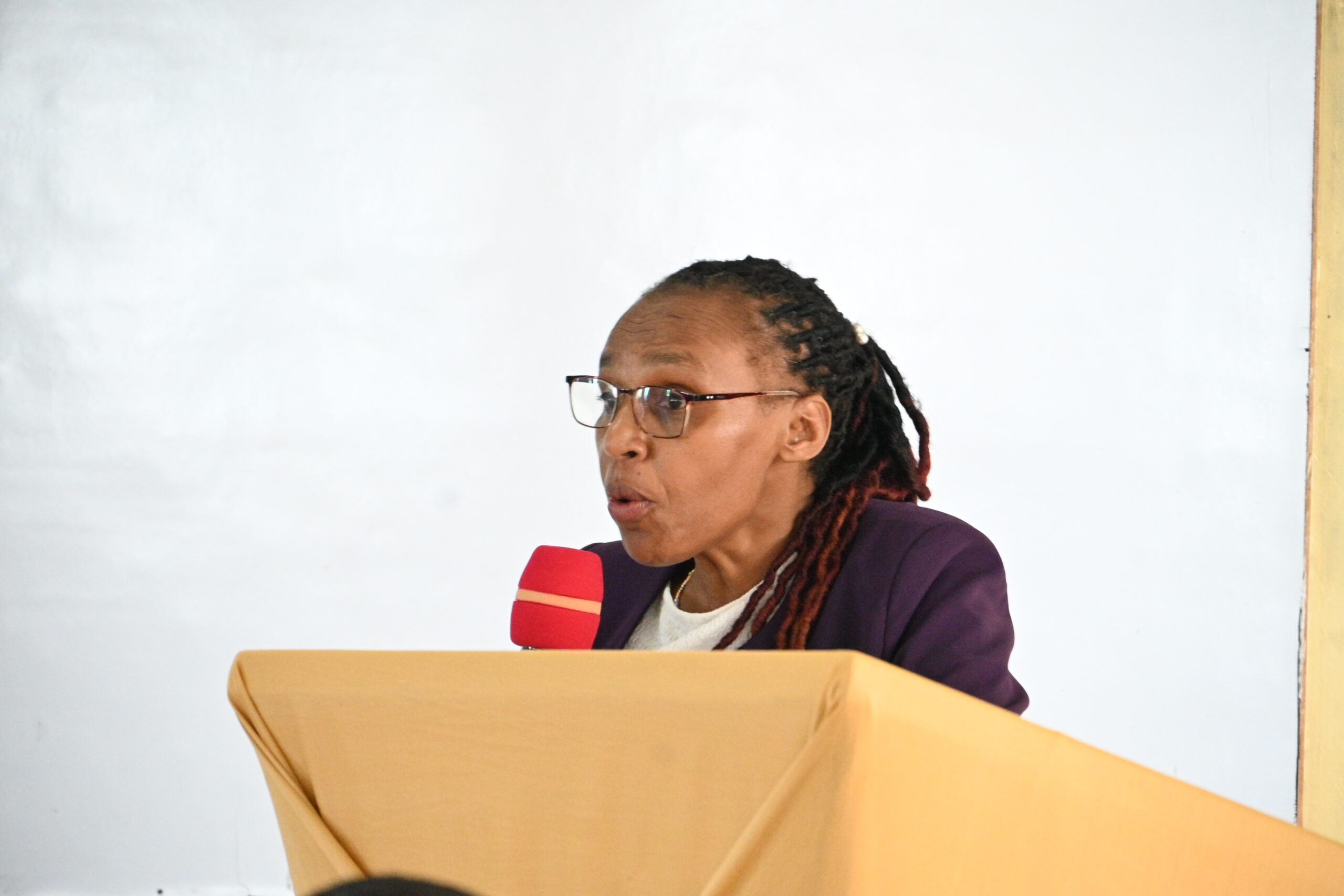
Dr Mercyline Kamande, Deputy Vice Chancellor Academics & Research Affairs at MKU, officially inaugurated the inaugural Research and Innovation Conference 2025 at MKU Mombasa campus on February 25, 2025. The theme was “Research, Entrepreneurship and Innovation for a Resilient Blue Economy”. Photo. BY James Wakahiu
By James Wakahiu
Mount Kenya University (MKU) has hosted a major conference in Mombasa on
the maritime economy .
The workshop convened a diverse group of scholars, researchers, innovators,
industry leaders and policymakers to engage in discussions centered on the theme
“Research, Entrepreneurship and Innovation for a Resilient Blue Economy.” The
inaugural Research and Innovation Conference 2025 at MKU Mombasa campus
took place at MKU Plaza in Mombasa town earlier this week.
Dr Mercyline Kamande, Deputy Vice Chancellor Academics & Research Affairs at
MKU, officially inaugurated the forum, which was also graced by Dr. Henry
Yatich, Principal of the College of Graduate Studies & Research. They recognized
the value of the blue economy and its capacity to solve the problems facing the
coastal area.
The theme of the conference is closely aligned with the government’s initiative to
leverage the Blue Economy as a means to tackle unemployment, promote
environmental conservation, foster diversity and inclusion, and ensure food
security. The event is part of MKU’s strategic plan (2025-2029) to decentralize
research dissemination, ensuring that MKU campuses respond to regional
challenges through research and innovation.
Dr Kamande encouraged students to translate their research into marketable
innovations, noting that MKU is at the forefront of job creation through research,
innovation, and sustainability in the Blue Economy.
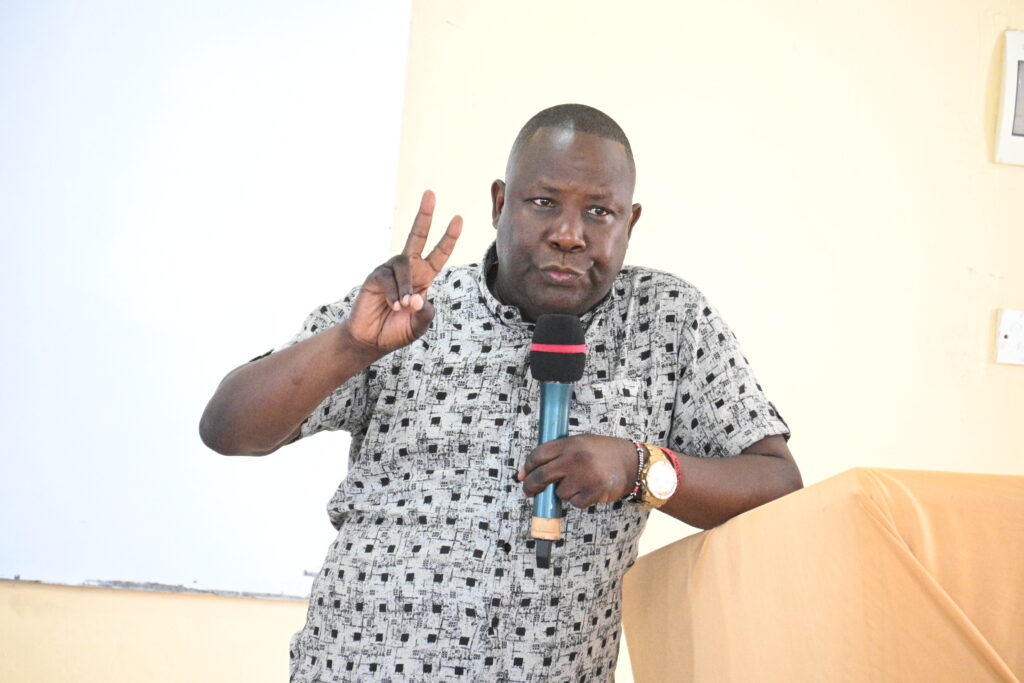
Photo/Keynote speaker, Mr Stanley Ndege Chai, Secretary of Shipping & Logistics at The Ocean & Blue Economy Office, part of the Executive Office of the President addresses the delegates.
Keynote speaker, Mr Stanley Ndege Chai, Secretary of Shipping & Logistics at
The Ocean & Blue Economy Office, part of the Executive Office of President
William Ruto emphasized the advancements in the Blue Economy resulting from
the passage of legislation in Parliament. “There is a huge potential within the blue
economy, which encompasses various activities including those on land, shipping,
and fishing,” he said.
Chai urged the university to initiate a programme in Maritime Law. “There are
opportunities for MKU to offer legal training in piracy, illegal fishing and maritime
dispute resolutions. These initiative will close the training and professional divide
in the prosecution of crimes committed on the seas and oceans. Maritime logistics
research is also a prime opportunity that bolsters the blue economy,” he said.
Moreover, he noted, as Kenyans examined research gaps and sought innovative
solutions for the blue economy, it is crucial to think boldly and collaborate
effectively. “We must leverage our combined knowledge to create a robust blue
economy that protects our ocean heritage for the benefit of future generations.
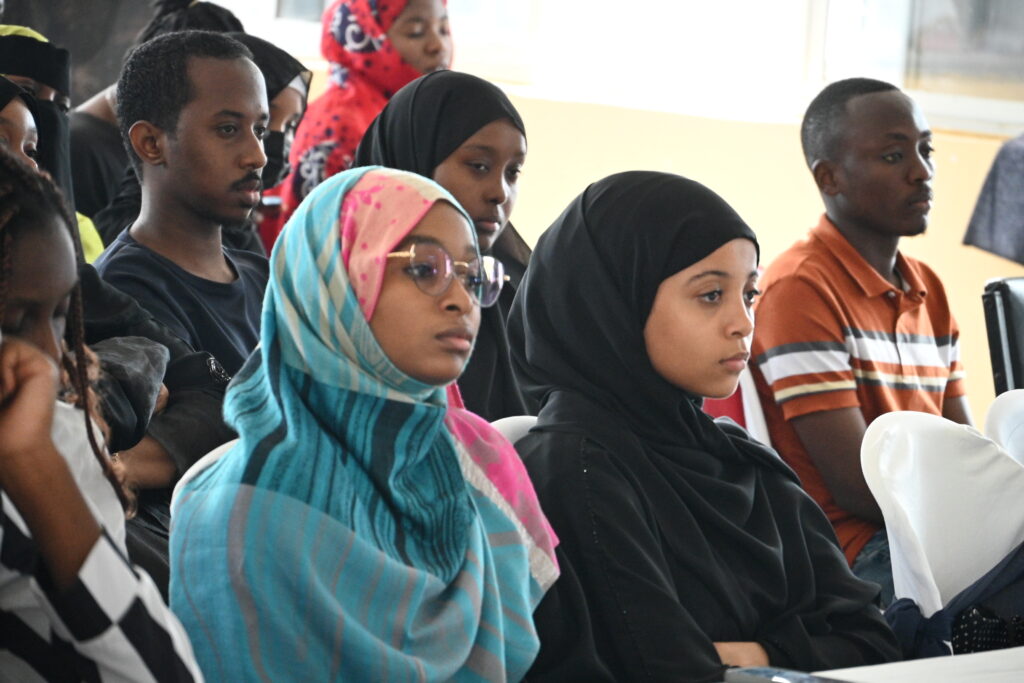
Photo/Participants at the workshop.
By uniting our efforts, we have the potential to elevate Kenya to the forefront of
sustainable ocean resource management, all while guaranteeing that our
communities enjoy the rewards of this transformation,” Mr Chai said.
Mr Chai called for improved maritime infrastructure to support deep-sea fishing
and reduce dependency on imported fish products. “The economic potential of tuna
fishing is huge, worth USD20 billion (Sh2.6 trillion) globally, yet Kenya
underutilizes its Indian Ocean resources,” HE ADDED.
Swahili Port
Mr Ayub Mohamed, the Campus Programme Manager at Swahilipot Hub, who has
been collaborating with MKU Mombasa on a range of initiatives, emphasized the
role of Swahilipot Hub in fostering innovations aimed at propelling the economic
growth of the coastal region. Located in Mombasa, Swahilipot Hub Foundation is
non-profit organization that focuses on innovation and technology. It serves as a
community-driven space that promotes technology, entrepreneurship.
Two presentations were delivered by students, while four were presented by the
teaching staff. Victoria Chebet, a student of Bachelor of Business Information
Technology (BIT) programme discussed the Maji ni Uhai Project. This initiative
focuses on ocean conservation, aiming to mitigate marine pollution via heightened
awareness of its effects, the reduction of plastic waste, and the protection of marine
ecosystems.
Gabriel Mwaingo, also a BIT student, delivered a presentation focused on the
innovative use of additive manufacturing and 3D printing technology. His
discussion centered on the potential to recycle plastic waste into high-quality 3D
filaments, which can then be utilised to create visual learning aids and models.
Phillip Bittok and Biko Magati Steve from the School of Computing and
Informatics examined Machine Learning Methods to forecast metal contamination
in Kenyan coastal water, sediments, and fauna. They said machine learning
improved forecast accuracy and enabled real-time data analysis in maritime
pollution monitoring, highlighting its importance.
The learners stressed that future research must address scalability, cost reduction,
and regulatory integration. “The government, private sector and academia must
partner for a sustainable Blue Economy,” they noted.
Dr. Zipporah Nyachwaya from the School of Business and Economics delivered an
analysis on Climate Finance and Entrepreneurial Opportunities within the Blue
Economy to promote sustainable growth in the face of climate change. She called
for deliberate financial interventions and legislative changes to capitalize on the
blue economy while tackling climate dangers.
“Using regulatory-driven blue bonds and financial incentives can boost private
investment in blue finance. It is important also to strengthen regulatory
frameworks with blue carbon plans and international funding channels to support
healthy marine economies,” she added.
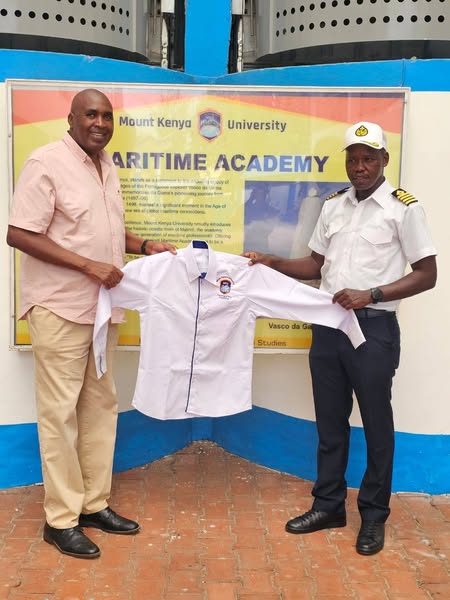
Photo/Kenya Ports Authority(KPA) CEO Captain William Ruto (right) recently visited the Malindi Maritime Academy owned by MKU. He was received by MKU Chairman Board of Directors and Founder, Prof. Simon Gicharu. Mr Ruto praised MKU’s bold investment in maritime education, urged STCW compliance and more Rating courses, and noted KPA will benefit as staff can now train locally. PHOTOS; COURTESY
She proposed mobilization capital through blended finance mechanisms,
strengthening environmental, social, and governance oversight, and elimination of
harmful subsidies that hinder conservation initiatives to expand sustainable
financing. She also described a strategy for using climate finance to tap into blue
economy entrepreneurial opportunities, arguing for sustainable growth in the face
of climate change’s critical concerns.
“Strategic investments in capacity building, skills training, and coastal sustainable
livelihood projects are essential for community engagement. This technique
empowers local communities to participate in and benefit from the blue economy,”
said Dr Nyachwaya.
According to the National Maritime Transport Policy, more than 90 per cent of
Kenya’s international trade is carried out by sea, noted Dr. Conrad Ochego from
MKU’s School of Business and Economics. “Cargo throughput at the Port of
Mombasa rose from 33.88 million metric tonnes in 2022 to 35.98 million in 2023
while container traffic grew 11.9PC to 1.62 million Twenty-foot Equivalent Units
(TEUs) in 2023,” he said.
Despite such optimistic sector growth estimates, Dr. Ochego asked: How can we
ensure this expansion is sustainable? In his presentation dubbed “Maritime
Logistics: A Catalyst for Sustainable Growth of the Blue Economy,” he identified
three key maritime logistics principles: efficient transit, marine environment
protection, and technical advancement.
“Cost reduction, shipping route optimisation, and port performance improvements
can increase efficiency. However, environmental protection requires responsible
waste management, oil spill prevention and sustainable shipping,” he added.
He also stressed the importance of technology, recommending sustainable fuels,
energy-efficient boats, and digital technologies to improve operating efficiency.
“There is a need for stakeholder collaboration to promote maritime logistics
sustainability in the future,” he added. He made several strategic recommendations,
including integrated transport networks to improve connectivity, port infrastructure
improvements to boost efficiency and competitiveness, and sustainable shipping
practices through innovation and regulation.
According Dr Yatich, Principal, College of Graduate Studies and Research, the
university has set aside Sh30 million in research grants to support faculty research,
conference participation, and publication in peer-reviewed journals this year. Out
of this, Sh20 million will fund school-based research grants, with also dedicated
funding for master’s and PhD students research component alongside the schools
research proposals.
He asked for continued support for students’ innovation projects, including
partnerships such as Africa Meets Bavaria (Germany), AGEA Business Idea
Competition (Leipzig-Germany), and Enrich Africa’s EU-AU collaboration from
South Africa. “The DAAD-funded ACCESS 2.0 project, will provide annual
business competition and boot camp opportunities for students from 10 partner
universities in Kenya,” he noted.
Dr Barasa Wamalwa, the MKU Mombasa campus director, commended partners
such as Ajira Digital, Swahilipot and Close the Gap for their support. He
emphasized the importance of leveraging Blue Economy opportunities to address
regional challenges and promote student-led research and innovation. He also
lauded the Vice-Chancellor’s Research and Innovation Grant, which supported the
inaugural workshop.
Dr Wamalwa highlighted the pivotal role that education plays in shaping the future
of the Blue Economy. He stressed its significance in raising awareness about
marine environments and in providing individuals with the essential knowledge
and skills required to cultivate and execute sustainable practices.
The workshop concluded with a call to action for researchers, students, and
policymakers to collaborate in developing innovative solutions for sustainable Blue
Economy growth in Kenya. “The insights articulated during this conference must
now evolve into tangible actions. By uniting under a common vision and taking
bold actions, Kenya stands poised to capitalize on the immense possibilities
presented by the ocean,” said Dr Wamalwa.
Meanwhile, the Kenya Ports Authority(KPA) CEO Captain William Ruto recently
visited the Malindi Maritime Academy, received by MKU Chairman Board of
Directors and Founder, Prof. Simon Gicharu and Dr. Christopher Mutembei. Mr
Ruto praised MKU’s bold investment in maritime education, urged STCW
compliance and more Rating courses, and noted KPA will benefit as staff can now
train locally.