Photo/MKU founder and Board chairman, Prof Simon Gicharu, joins Murang’a High School students in a jig during a students mentoring and alumni meeting at the institution last weekend. Photo; Courtesy
By James Wakahiu
editor@themountainjournal.co.ke
The Kenya Institute of Curriculum Development (KICD) has already
developed curriculum designs for all the three grades at Senior School in
preparation for the implementation of the new Competency-Based
Curriculum or CBC.
The Institute has already evaluated textbooks for Grade 10 and awarded
the qualified publishers. These books shall be distributed to all public
Senior Schools during this year 2025 in readiness for Grade 10 in the
year 2026.
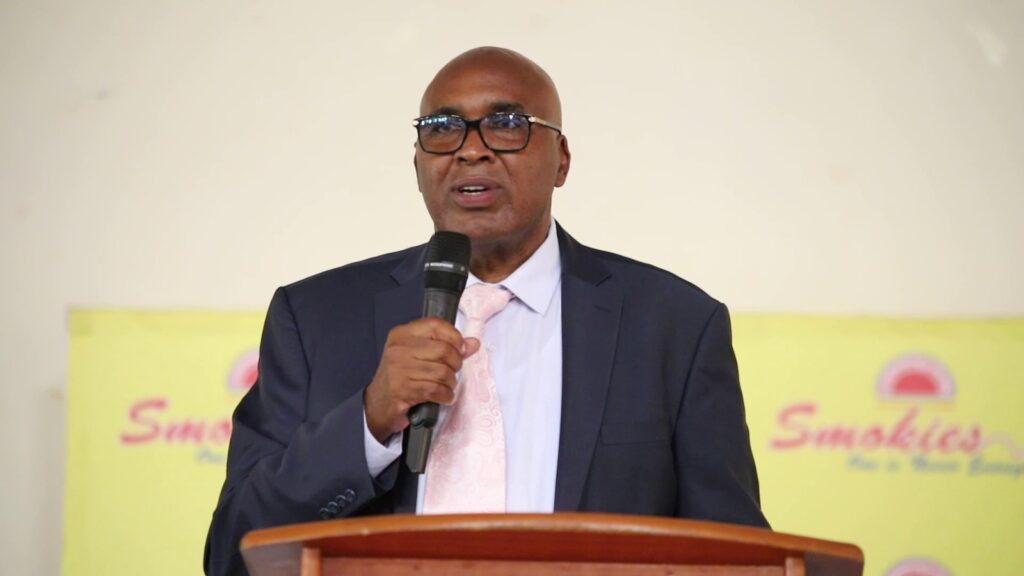
Photo/MKU founder and Board chairman, Prof Simon Gicharu, also KICD chairman, adressing Murang’a High School students, staff and alumni during a students mentoring and alumni meeting at the institution last weekend. Photo; Courtesy
Speaking at Murang’a High School over the weekend, KICD chairman
Prof Simon Gicharu said the institution will be partnering with the
Teachers Service Commission (TSC) and the Education ministry in
induction of senior school teachers during the months of August and
September to ensure their readiness. “The institute will be mounting a
major stakeholder sensitization on Senior School during the months of
July and August that shall involve parents, boards of management and
teacher unions,” he said.
KICD is responsible for the CBC component, Teachers Service
Commission (TSC) is responsible for Competency Based Teaching and
Leaning (CBT/L), the Kenya National Examinations Council (KNEC) is
responsible for the Competency Based Assessment (CBA); while the
Ministry of Education is responsible for provision of Competency Based
Resources.
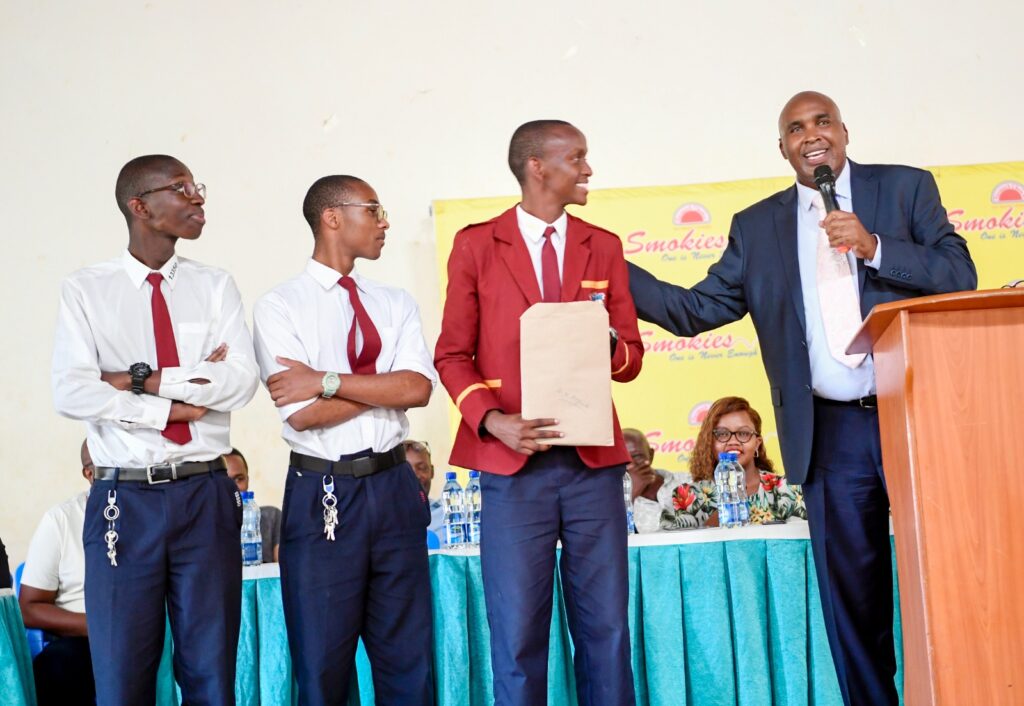
Photo/KICD Chairperson and also MKU founder and Board chairnan, Prof. Simon Gicharu hands a lunch token to Murang’a High School students in Murang’a county during an alumni and mentorship event at the institution last weekend. Photo; courtesy
CBC has been successfully implemented in Kenya since 2019 up to
2025; with the first cohort being at Grade 9 (Nine). In the year 2026,
Grade 9 learners transit to Senior School (Grade 10). Senior school
comprises three years of education for learners in the age bracket of 15
to 18 years and marks the end of Basic Education as defined in the Basic
Education Act, 2013.
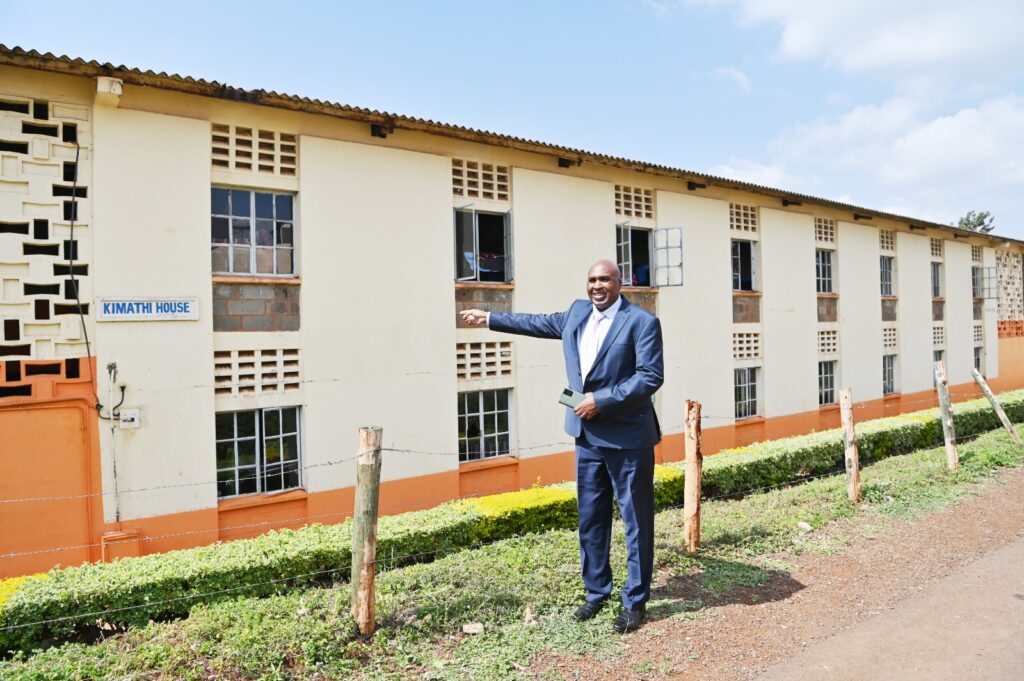
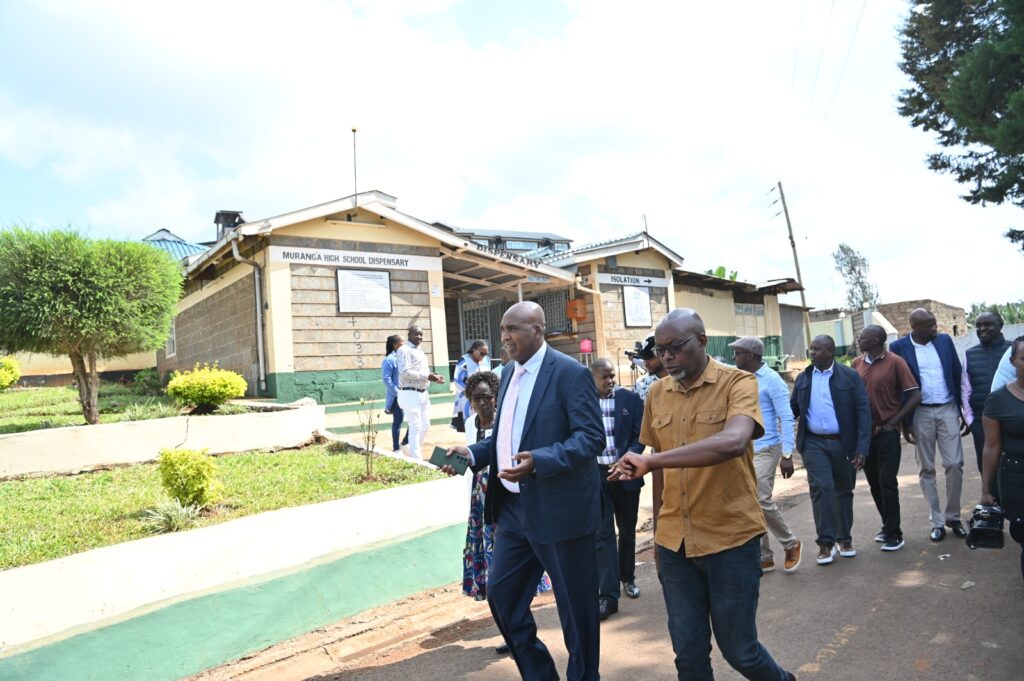
Photo/Kimathi dormitory where the MKU Chairman Prof Simon Gicharu slept when he was at Murang’a High School.
“Learners exiting this level are expected to be “engaged, empowered and
ethical citizens” ready to participate in the socio-economic development
of the nation. At this level, learners are ready to specialise in a career
path of choice since they have had opportunities to explore their own
potential, interests and personality,” Prof Gicharu said.

Photo/KICD Chairperson and also MKU founder and Board chairnan, Prof. Simon Gicharu interacts with Murang’a High School students in Murang’a county during an alumni and mentorship event at the institution last weekend. Photo; courtesy
He said the learners at Senior Schools shall take a minimum of seven
subjects out of which four (4) shall be compulsory; English Language,
Kiswahili Language, Physical Education and Mathematics.
There shall be two forms of Mathematics: Core Mathematics for learners pursuing
the STEM Pathway (those within the Science, Technology, Engineering,
and Mathematics fields, and Essential Mathematics for learners taking
any of the other two pathways -Arts and Sports and Social Sciences.
Prof Gicharu, who is also the founder of Mount Kenya and Mount Kigali
universities, was a guest during the Murang’a High School breakfast
treat and mentoring of students by alumni meeting held on Saturday
June14th. He was among the scores of alumni from the school, having
studied there between 1983 and 1985.
“The future of this country and of the world lies in your hands,” he told the students.
Others at the event were Board of Management members represented by
Mr. Samuel Irungu, Murang’a High School Old Boys Association
(MOBA-MUHAE) Chairman, Mr. Amos Mwangi, representatives from
the Farmers Choice Ltd, led by Mr. Michael Ngugi. They were hosted
by the Chief Principal of Murang’a High School, Mr. Willie Kuria and
Deputy Principal, Mr Kogi and the staff of the school.
“Each one of you is capable of being the best you would wish to be in
your lives. Always aspire to be nothing else but the best that you can be
for you have the capacity to be the best – strive to attain that.
In doing that, do not be satisfied by average achievement, strive for the best,” he
urged the students.
He cautioned them to beware of the greed for instant success – fast
money, fast recognition and immediate flashy lifestyles. “Remember,
real success is a process that requires time, skills and correct mindset.
Pease do not be in a rush to look for quick success. You must grow firm
roots before you reach the fruits of your success,” he warned.
He said the temptation for fast success may lead to shoddy deals and a
corrupt character. “Be honest, reliable and respectful. These traits open
doors faster and more effectively than degrees will. These virtues will
earn you trust, where trust in today’s world is stronger than currencies of
this world in creating and establishing lasting relationships,” he added.
Prof Gicharu said Murang’a High School’s rich history is very well
known. “This is a history of nurturing young talents to success, of
fostering resilience, and instilling values that has shaped many students
over the years to be responsible citizens. This is evidenced by our own
cases. If this is not true, we would not be here this morning,” he said.
He told the youth to choose their friends wisely and to embrace
innovation and technology in our lives. “As you are all aware, we are in
the 4th Industrial Revolution or also called 4IR or “Industry 4.0” which
describes the rapid advancements in technology as experienced in the
21st Century that brings together the digital, physical and biological
worlds,” he said.
“We are now forced to learn new phenomenon such as Artificial
Intelligence or AI, robotics and Nano technology and so on. All these
come with new opportunities and challenges. We must develop strong
digital literacy skills. We must also understand and appreciate online
safety, cyber security and responsible social media usage. All these are
indicators that we must all embrace life-long learning so that we move
with the fast evolving technology.
Ends