The Mountain Journal
The Council of Governors Chair, Anne Waiguru, says county
governments have made tremendous strides in enhancing food security through
adoption of modern technologiesin agriculture.
The Kirinyaga County governor recognized that the value in
agriculture is more pronounced in rural areas where it provides 70% of
employment, with smallholder farming leading while women provide 70% of the labor force doing
the bulk of the work to produce, process and market the produce.
The governor says the devolved units are therefore helping
women farmers to integrate innovative technologies in crop and livestock farming to
boost food production and income.
The governor who spoke on Monday at a side event of the
United Nations 67 th Session of the Commission on Status of Women (CSW) in New York,
where she noted that through Agricultural Extension Officers, counties are
training farmers on best farming practices to improve production and on value addition for
their produce to fetch more money and to avoid food loss and waste.

County governments managed to reach 4,523,889 farmers
with extension service within the year while pointing out low use of extension
services as one of the challenges facing the sector.
“Whereas County governments continue to expand outreach to
farmers, rural women face barriers and constraints, including limited education,
and low household incomes,” Waiguru said.
Counties are now exploring the use of Digital Extension
services to overcome some of these gender nuanced challenges.
The COG Chair said that the counties approach in developing
the agriculture sector has now been focused on using technological innovations to
address critical constraints faced by farmers over the last 10 years in devolution.
Towards accelerating Food security, counties have invested
in agricultural machinery with additional purchase of 350 tractors operating in 29
Agriculture mechanization stations.
In the development and commercialization of the livestock
sector, she said counties have procured 10,782,369 doses of various vaccines for
livestock vaccination,
conducted 369,788 subsidized Artificial Insemination (AI)
services; procured 449,673 straws of semen, distributed 4,376 cattle, goat, and sheep
breeding stock and installed 68 milk coolers.
“The county governments have also introduced commercial
poultry farming by supporting farmers with 1,608,108 improved organic chicks
and distributed close to three million fingerlings to support farmers to grow fish,” she
added.
All this, she said, is helping farmers increase food
production, tackle post-harvest losses and add value to their products.
The Kirinyaga Governor said that agriculture accounts for
22.4% of nominal GDP in Kenya making it a key employer which absorbed over 1.6
million additional workers during Covid-19 pandemic increasing its share from 47 to 54
percent.
In the 2021/2022 financial year, the COG chair said that County
Governments allocated Ksh. 35.5 billion of their budgets to the agriculture sector
development and in the wake of climate change and high demand for fruits in the global
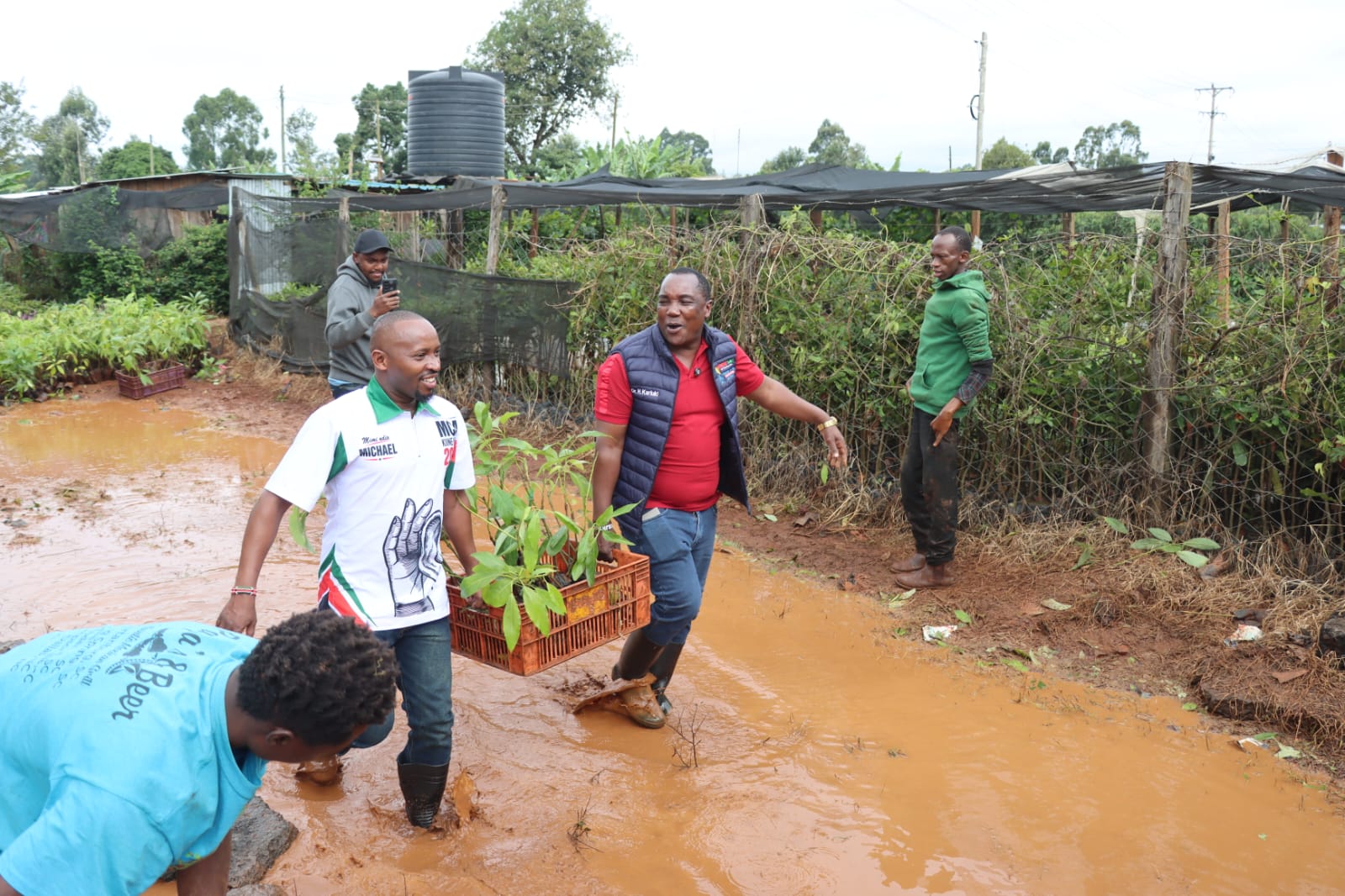
market, county governments distributed 643,686 of assorted fruit tree seedlings.
“In appreciation of the importance of potatoes as a source
of food, income, and employment, Counties distributed 45 metric tonnes of potato
vines. This is expected to go a long way in improving farmers’ incomes and increasing
foreign exchange,” said the governor noting that counties also distributed 66,718, 50kg
bags of assorted subsidized fertilizers, 507,786 avocado seedlings, 401,000 coffee
seedlings, 38,000 coconut seedlings, 46,400 tissue culture bananas and 2,090
irrigation kits.
Gradual integration of technology in agriculture is drawing
women and young people to the sector, she observed.
Countries are also helping women to leverage on mobile phones
and digital applications like phone apps, e-commerce, websites, and other online
platforms to get markets for their agricultural produce.