
The Mountain Journal
Coffee farmers in Kirinyaga County are
set to reap big as the county government implements a massive revitalization
program in the sector.
The program whose objective is
increasing coffee production and productivity within smallholder systems
targets 18 coffee factories within seven Farmers’ Cooperative Societies in the
county
The program focuses on having a government
and private driven coffee sector that implements farmer centric and whole value
chain driven interventions that will deliver quick wins with rapid impact.
The selected factories will undergo
modernization through installation of modern eco pulping equipment, metallic
coffee drying beds, coffee sorting sheds, coffee seedlings nursery, expansion
of coffee conditioning bins as well as tilling of fermentation tanks and solar
driers, depending on individual factory needs.

The county government will also carry
out capacity building of farmers and Cooperative Societies Management teams,
the youth and extension officers as well as facilitate access to fertilizer
subsidy and coffee seedlings.
The benefiting factories have been drawn
from seven farmers cooperatives namely Mutira, Ngiriambu, Baragwi, Karithathi,
Rung’eto, Mwirua, Kabare.
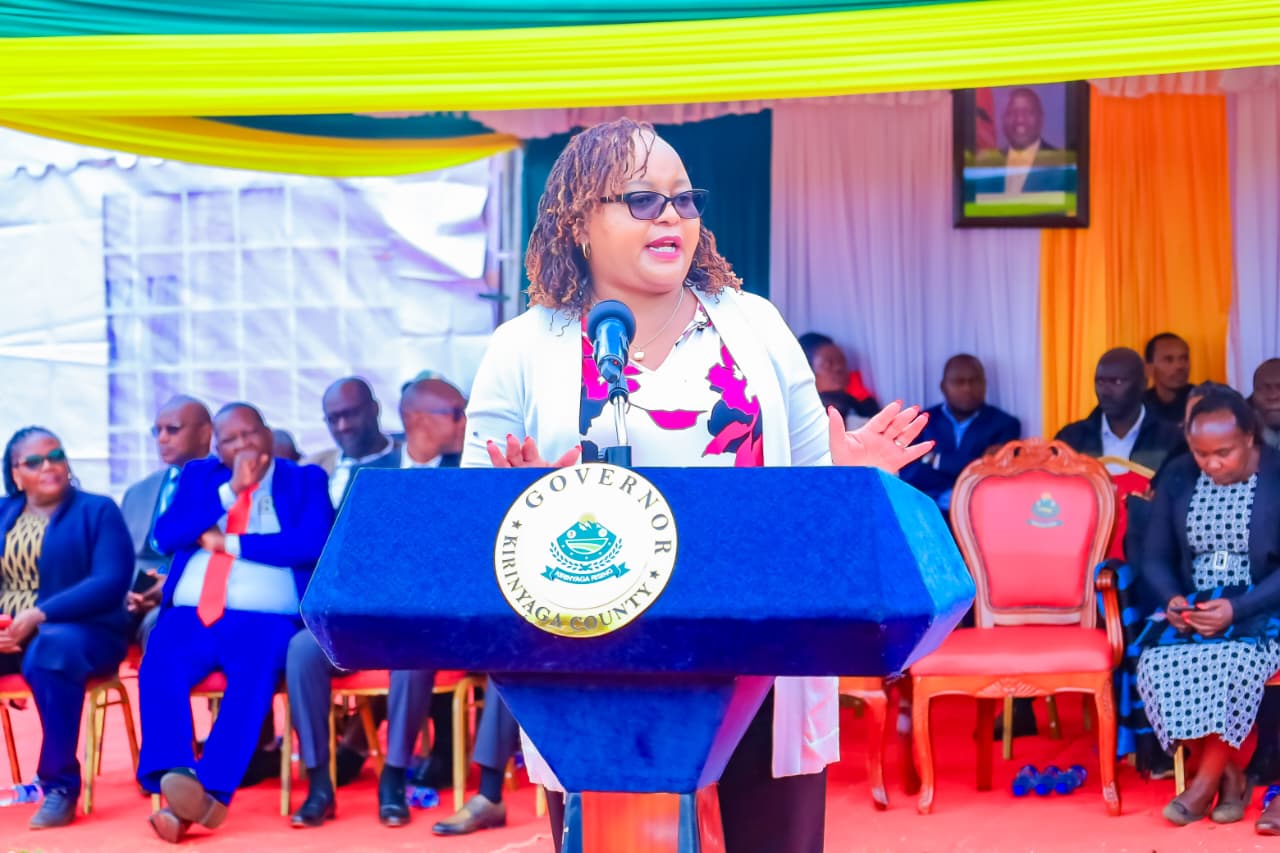
Governor Anne Waiguru has said that
through the Wezesha Kirinyaga economic stimulus program, her administration is
committed to empowering farmers to increase agricultural productivity with the
aim of increasing their incomes.
She noted that while the county has been
supporting farmers to diversify their practice, the traditional cash crops such
as coffee and tea have not been left behind since they have a great potential in
turning around the county’s economy.
She said that modernization of coffee
factories will increase efficiency and cut on production costs translating to
more earnings for farmers.
Julius Muriuki, the Vice Chairman of
Mwirua Farmers’ Cooperative Society in Ndia, said that farmers are highly
anticipative of the benefits from the program.
Their selected factory, Karia-ini, will benefit from a modern eco
pulping machine, metallic drying beds and a modern coffee seedlings nursery.
He said that the eco pulping machine
which uses less electricity and water will enhance efficiency in coffee pulping
and enable the farmers to save on water and electricity.
“It is also faster and
thus will pulp double the amount of coffee pulped by the old machine at one
given time” said the vice chairman.

He added that availability of coffee
nursery will enable them to produce high yielding seedlings for sale to farmers in
the cooperative society with an aim of increasing the number of coffee bushes
in the area which will in return increase production.
“Demand for high yielding varieties of coffee
is very high and we aim to bridge that gap by propagating our own seedlings at
the factory for distribution among our farmers” he said.
He thanked the County Government for
their input in revitalizing the coffee sector which he said had the potential
of improving the living standards of the residents.
Francis Karimi, the Chairman of Mutira Farmers’
Cooperative Society in Kirinyaga Central said that Kiangundu Coffee Factory
will get an Eco Pulper, an expanded conditioning bin and a modern coffee
seedlings nursery.
He said that the modern eco pulper has a
capacity of pulping 5 tons of coffee per hour as opposed to the 3 tons pulped
by the traditional machines.
He said that the modern machine will produce up to
98% of properly pulped berries as opposed to the traditional machines that nips
more berries thus reducing the quantity of well pulped berries.
This will lead
to improvement of the quality of coffee being processed at the factory level
and reduce the cost of production translating to more income for farmers.
Karimi added that the replacement of
wooden coffee drying beds with metallic ones will save factories a substantial
amount of money used for routine maintenance of the wooden ones.
“We have been carrying out repairs on
the wooden beds every season but with metallic ones, we will save that money
for the benefit of the farmer” said Mr. Karimi, adding that the metallic beds
also allow for proper drying of coffee.
He said that with various interventions,
the cooperative aims at increasing coffee production from around 4kg to 10 kg
per tree.
Kirinyaga County produces an average of
40,000 tons of coffee annually earning farmers around Ksh. 2.8 billion.
Most of the coffee is produced by small
holder farmers who collectively sell through their Cooperative Societies. www.themountainjournal.co.ke

I am a Mwerua Farmer i sell my coffee at kiambwe factory but also i do clearing and forwarding at ICD Nairobi and Msa am requesting a job to export coffee after sale.
Thank you.