Eye-opening Research and Innovation week
concludes at Mount Kenya University
By James Wakahiu
Mount Kenya University (MKU)’s Vice Chancellor Prof Deogratius
Jaganyi has decried the high rate of unemployment among Kenyan
university graduates. Currently, Kenya faces a 12.9 per cent graduate
unemployment rate, according to the Kenya National Bureau of
Statistics (KNBS).
“At what point will we find sustainable solutions to youth
unemployment, productivity and improving our livelihoods? Research
and innovation must play a central role in addressing this challenge—not
only for Kenya but across the global south,” Prof Janani said.
He said KNBS data further reveals that 1.74 million Kenyans are
unemployed, with 1.54 million of them aged between 20 to 29
years—the age bracket that includes many university graduates.
Moreover, long-term unemployment rates show concerning gender
disparities, with 26 per cent of women experiencing extended periods of
joblessness compared to 12 per cent of men.
“These statistics highlight the urgency to create more inclusive strategies
to empower young people, particularly women, in accessing sustainable
employment. The innovation sessions have addressed cross-cutting
themes that promote deeper engagement with young people, fostering
the creation of tailored strategies to make our graduates more
competitive in local, regional, and global economies,” he said.
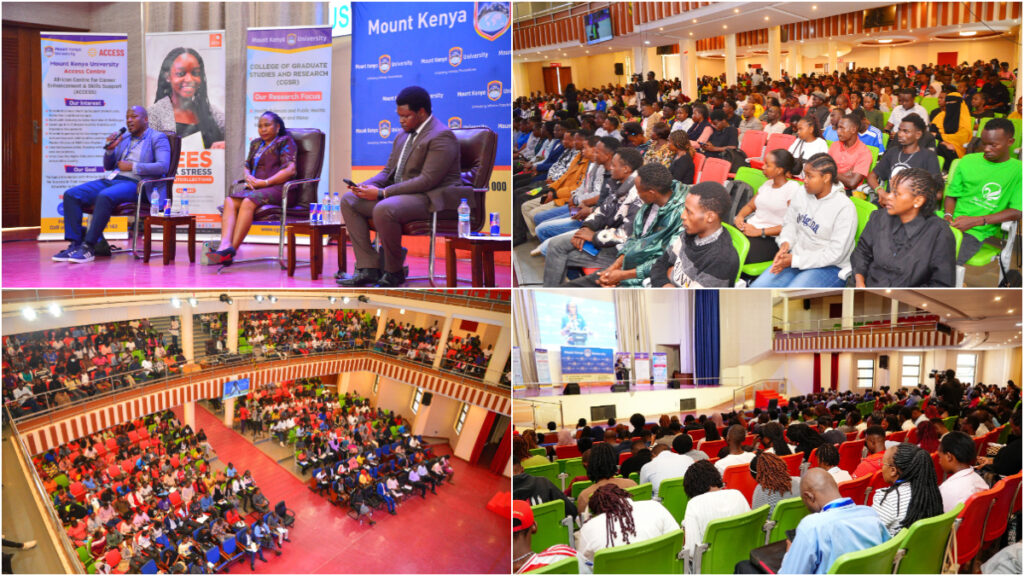
The VC spoke on Friday at the conclusion of this year’s innovation
week, themed “Research and Innovation for Sustainable Production and
Livelihoods”, that kicked off Monday, October 14.
Welcoming the chief guest, Prof Jaganyi said the event comes at a
pivotal moment when employability is at the forefront of discussions in
African institutions of higher learning—particularly concerning
Generation Z, who are the future of our workforce. “This year’s theme
aligns with the Kenya Vision 2030, the United Nations Sustainable
Development Goals (SDGs), and the African Union Agenda 2063m,” he
said.
The VC called for practice-oriented training and research, guided by
industry players, as key pillars for success. “My gratitude to Innova
Limited, Guaranty Trust Bank-Kenya, Equity Bank, the National
Research Fund, Magfre Limited, Modern Tents and Chairs Limited, and
Maruti Limited, the event’s sponsors, for their unwavering support.
These organizations have nurtured innovation and employability through
financial contributions and collaborative programmes,” he said.
The chief guest, Dr. James Njogu, Ag. Secretary General / CEO of the
Kenya National Commission for Unesco (KNATCOM) said Kenya’s
approach to research and innovation for sustainable production and
livelihoods integrates various strategies across multiple sectors to drive
economic growth, enhance environmental sustainability, and improve
quality of life.
“There over 20 laws in Kenya with components on Research and
Innovation in all sectors. But we cannot solve our problems with the
same thinking we used when we created them, according to Albert
Einstein (1879 – 1955),” he said.
Dr Njogu said Steve Jobs was renowned for his extraordinary ability to
innovate and transform entire industries through a unique blend of
vision, design aesthetics, and an acute understanding of consumer needs.
His innovative prowess was evident in products like the iPod, iPhone,
and iPad, which not only redefined their respective markets but also
changed how people interact with technology.
“Jobs emphasized simplicity and elegance in design, prioritizing user
experience, which set Apple apart from competitors. His leadership
style fostered a culture of creativity and collaboration, allowing his
teams to push boundaries and think differently. Overall, Jobs’s legacy
lies in his ability to anticipate trends, combine technology with art, and
inspire a devoted following,” he said.
Dr Njogu said Kenya’s Bottom-Up Economic Transformation Agenda
(BETA) focuses on improving the livelihoods of all citizens, particularly
marginalized groups. “Innovation and research are catalysts for
entrepreneurship, job creation, and economic growth,” he said.
He said universities can bridge the gap between research and practical
applications that benefit the economy by focusing on improving the
livelihoods of all citizens, particularly marginalized groups. “Research
and innovation are key drivers in achieving these goals, providing new
technologies, processes, and approaches that help address challenges
such as resource scarcity, climate change, and economic disparity,” he
said.
Sustainable production and livelihood are essential to ensuring long-
term economic growth, environmental protection, and social equity. By
promoting green technologies, fostering collaboration, investing in skills
development, encouraging supportive policies, and leveraging digital
tools, we can build a resilient and sustainable future,” he said.

Opportunities for funding
During the week, Zindigi Prize Regional Manager, Mr. Ibtisam Babar
from Islamabad Pakistan, open talks with MKU on possible
collaborations during the 2025 challenge and scholarships for our
student innovators. The upcoming Zindigi Kenya regionals that will be
held from 28th – 30th October, 2024.
The VC urged students to take full advantage of MKU’s entrepreneurial
and innovative programmes. These include the African Center for
Career Enhancement and Skills Support (Access) Project (2025–2029),
funded by the German Academic Exchange Service (DAAD), which
was recently renewed to enhance career development and skills support.
Another is the Skies Initiative by the World Bank, aimed at
strengthening Kenya’s innovation ecosystem. “Our latest collaboration,
“Africa Meets Bavaria,” promotes digital product development with
support from Bavaria and led by Technical University of Munich,
Germany,” said Prof Jaganyi.
The VC commend the MKU faculty for their bold steps in securing
jointly funded projects that bridge the gap between academia and
industry. “A perfect example is the Innova Limited, which recently hired
two of our alumni and has offered a paid internship for one graduate
from the class of December 2024. Additionally, four of Innova’s staff
members have served as coaches for the hackathon competition held this
week,” he said,
Equity Bank managers have also met with MKU’s research team to
explore collaborative initiatives for accelerating business ideas and
identifying potential investors. “These partnerships are a testament to the
impact we can achieve when academia and industry join forces,” he said.
He challenged more industry stakeholders to join this journey of
innovation and skill-building. “Organizations such as the Kenya
Association of Manufacturers (KAM), Federation of Kenya Employers
(FKE), and Kenya Private Sector Alliance (KEPSA) have a vital role in
promoting practice-based learning across higher education institutions
(HEIs). Together, we can position Africa as a leader in competitive
labour markets and innovative solutions,” he said
The Access Project will play a crucial role in these efforts by hosting
annual innovation boot camps from 2025 to 2029 for students at MKU
and our 10 affiliate universities in Kenya. The boot camps are aimed at
offering an excellent platform for young innovators to develop solutions
that meet industry needs while contributing to sustainable production
and livelihoods.
“MKU is on a path to building a more promising future for our students
and the nation. With the continued support of our industry partners, I
believe that 2025 will be a milestone year as we push towards a
sustainable and prosperous Kenya,” he said.
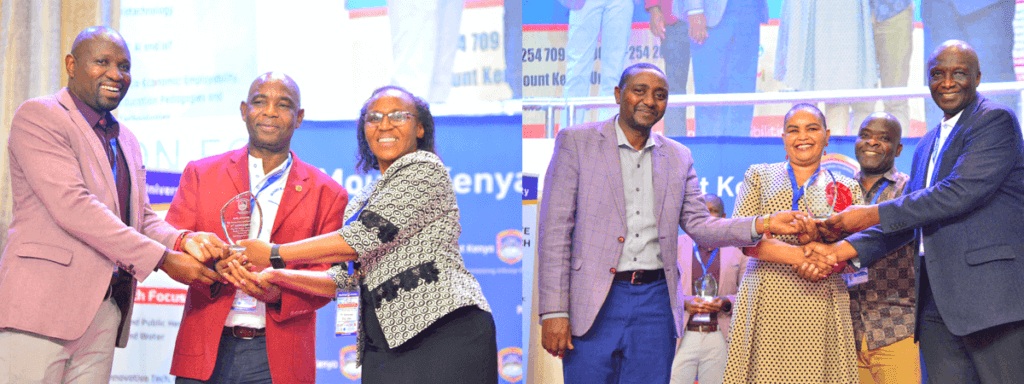
Hackathon Winners
Closing day saw different stakeholders showcase the innovations,
complete with an exhibition competition. MKU honoured winners of
the AI Hackathon, who navigated through intense competition and
transformative training under the guidance of MKU expert mentors.
The hackathon’s objective was to generate artificial intelligence (AI)
solutions to revolutionise teaching and learning at all levels. The call
attracted close to 124 students from different schools, out of which we
shortlisted 70 students.
The winners were the ATG, a group of three students who came up with
a solution to help lecturers to conduct virtual classes and explain
mathematical, and engineering concepts better without using pens,
blackboards or white boards. They received a cash prize of KSh75,000.
The First runners-up were Local Host, a team that developed a
personalised learning platform called EduTech to assist students with
dyslexia. EduTech incorporates tools like management, exam
preparation, and skill and career guidance tools. They received a cash
prize of KSh50,000.
Alchemists, a team of four students who created an AI modal that helps
students learn faster, mainly targeting Dyslexia students received a cash
prize of KSh25, 000. They were the second runners up.