
The Mountain Journal
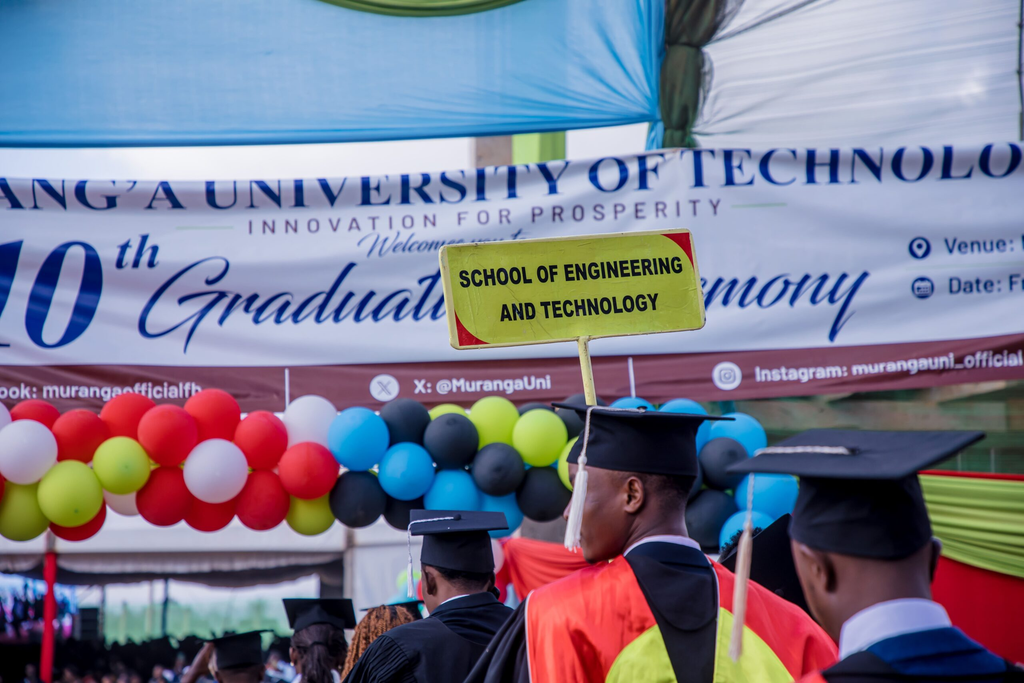
More than 1,700 students graduated at the Murang’a University of Technology (MUT), a large number since the institution was granted a charter 10 years ago, said the Vice Chancellor, Prof Dickson Nyariki.
Nyariki underscored the institution’s achievement in the year to the assembly of an electric vehicle christened MUT 001, powered primarily by electricity and supplemented by solar energy.
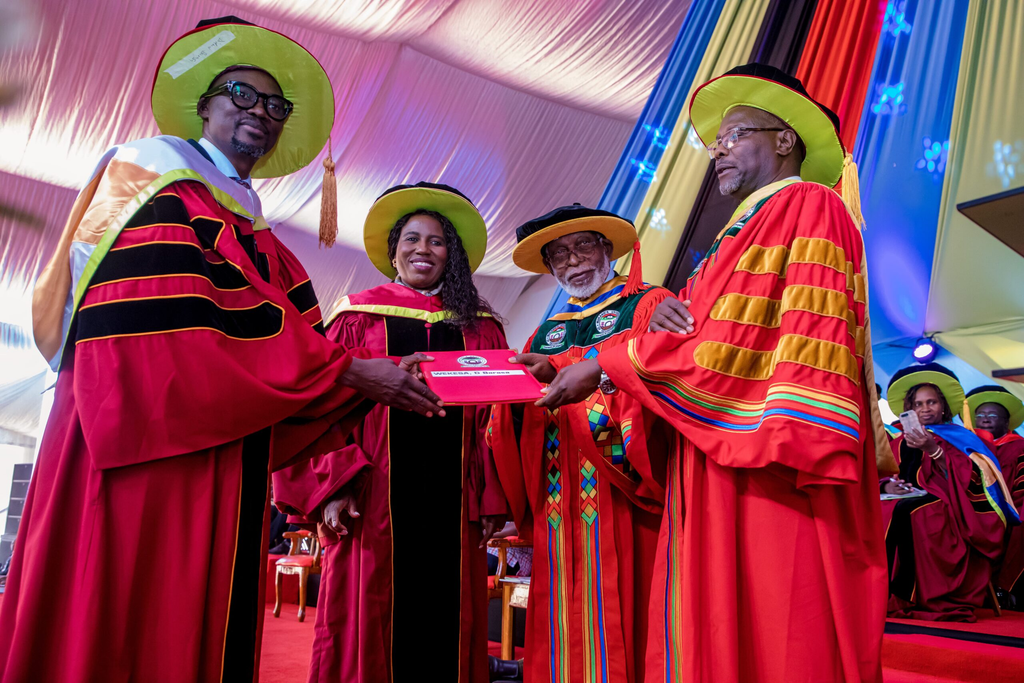
He spoke during the 10th graduation ceremony, where PS Higher Education Dr. Beatrice Inyangala was the chief guest, where 17 students among them Kimilili MP Didmus Barasa were conferred PhD’s.
Nyariki said the motor vehicle innovation has demonstrated the university’s commitment to research, innovation and sustainable technology.
The VC outlined that the varsity has developed practical, homegrown solutions in agricultural technology, renewable energy, information technology and appropriate technologies for rural and peri-urban communities.
The notable student innovations include MaternaGuard—an intelligent biomedical wearable device for early detection of postpartum haemorrhage; TINNISYNC—a wearable solution for monitoring and managing somatic tinnitus; SheriaKE AI—an artificial intelligence platform improving access to legal information and services; and Linda Shamba Robotics—which applies intelligent technologies to precision agriculture.
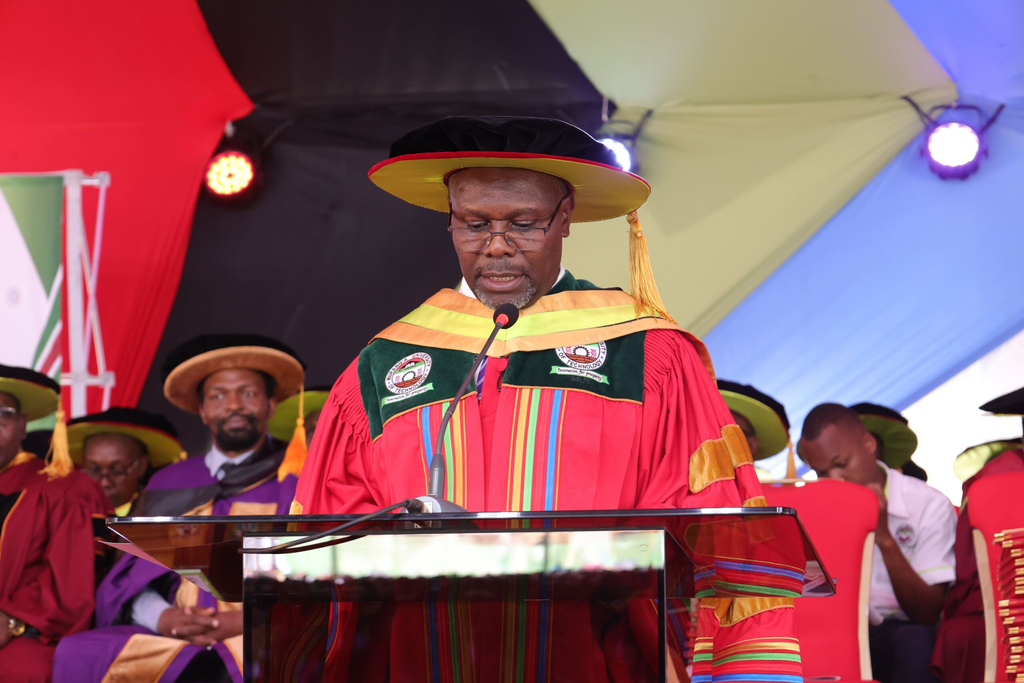
“I am pleased to report that KIPI has recently granted the University one patent and two utility models, a significant milestone in translating research and innovation into protected intellectual property with commercialisation potential,” said Nyariki.
The PS said the rapidly changing global economy requires graduates to continuously upskill, reskill, and acquire multiple skills, observing that artificial intelligence, automation, biotechnology, robotics, fintech, and digital platforms are transforming workplaces and homesteads.
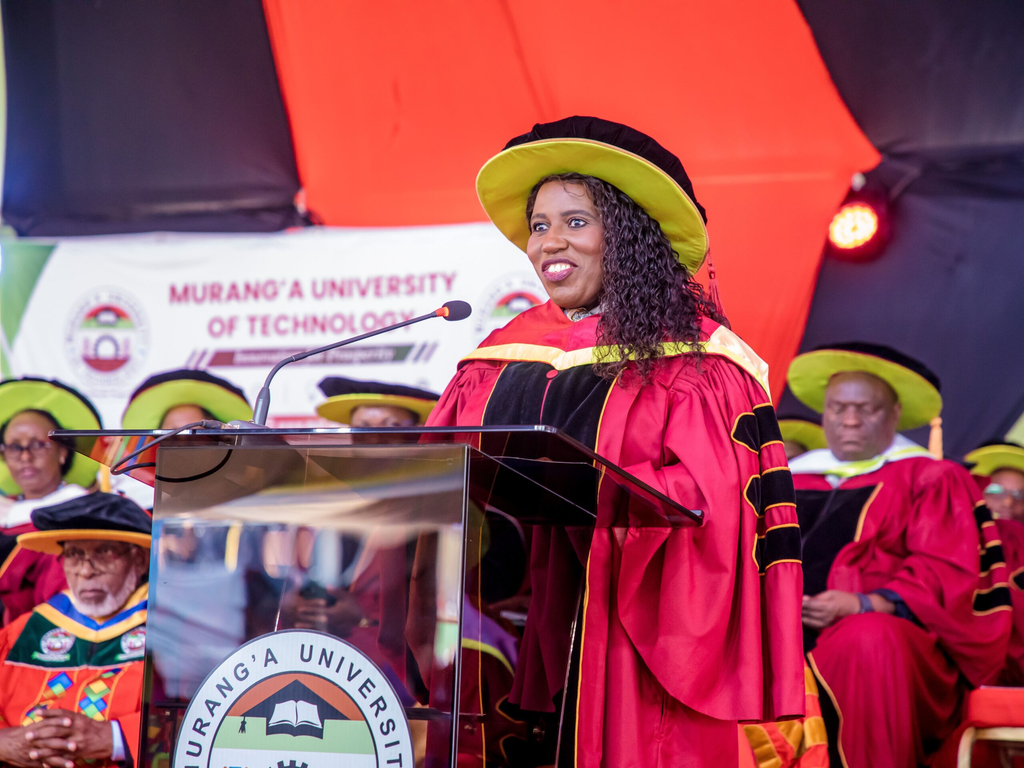
“The World Economic Forum’s Future of Jobs Report 2025, global structural transformation could create 170 million jobs while displacing 92 million by 2030 and beyond,” said Inyangala.
Varsity Chancellor Prof Justin Irina, on his part, said research and innovation remain central to national progress, and thus called for strengthening of the laboratories and supporting faculty-led research across disciplines.
The country, he said, was faced with complex challenges—including climate change, public health concerns and food insecurity—universities must generate evidence-based knowledge and practical solutions that improve lives.
Irina lauded the continued support of the Murang’a County Government through the transfer of land at Mariira, to the university to develop and implement its agricultural and environmental programmes.
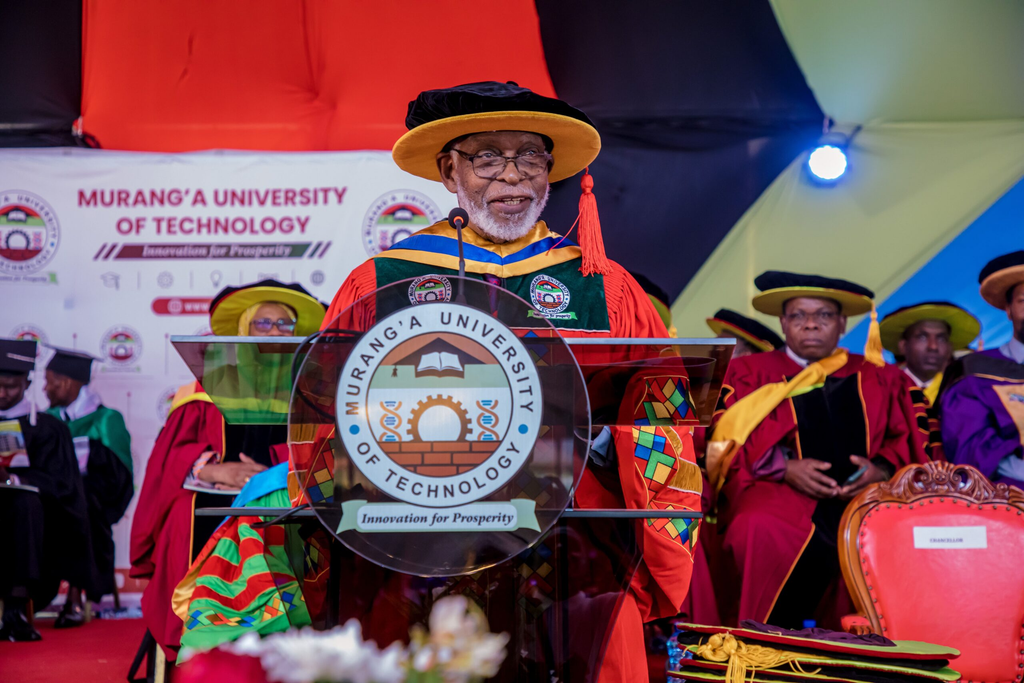
“This partnership has enabled the University to begin infrastructural development at Mariira and has created an important foundation for the growth of agricultural education, research and innovation,” said Prof Irina.