
The Mountain Journal
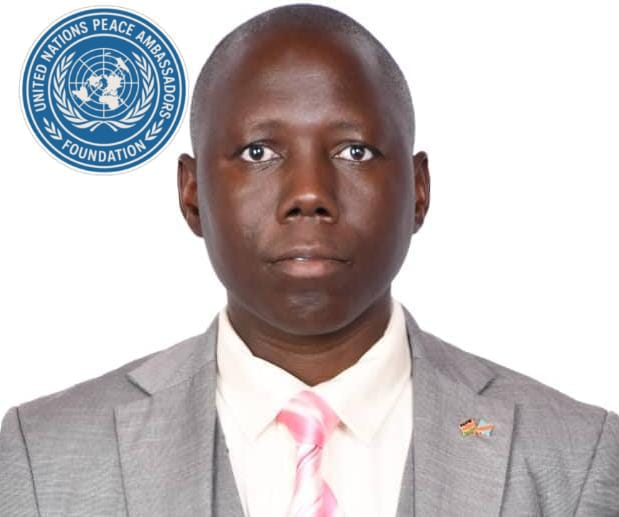
Global Union for Peace and Development (GUPD) Founder and Global President Amb. Eugene Kavune Nzabonimba has urged political and community leaders to rise above their differences and work together in addressing conflicts and socio-economic challenges affecting millions of people.
Ambassador Nzabonimba said leaders had a responsibility to promote peace, unity and development rather than fuel divisions based on political affiliation, religion, ethnicity, nationality or ideology.
In a global appeal, he called on presidents, prime ministers, legislators, governors, diplomats, religious leaders, traditional elders, business executives, civil society organisations, women and youth leaders to make dialogue and cooperation the foundation of their engagement.
He said ordinary citizens were looking to their leaders for solutions to problems affecting their daily lives, including unemployment, poverty, insecurity, inequality and social tensions.
“Our people need peace, hope, dignity, opportunity and solutions. They do not need unnecessary division, hatred, violence or endless confrontation,” Ambassador Nzabonimba said in a statement.
He urged leaders involved in disputes to pursue dialogue and mediation instead of confrontation, saying disagreements should not be allowed to escalate into violence.
“Where there is disagreement, let there be dialogue. Where there is conflict, let there be mediation. Where there is misunderstanding, let there be listening,” he said.
The peace advocate also challenged leaders to move beyond holding meetings to identify problems and instead concentrate on developing practical interventions that can be implemented and measured.
He said leaders should establish what could be done immediately, identify those responsible for implementing agreed measures, determine the resources required and establish mechanisms for measuring progress and assessing the impact on communities.
Kenya urged to safeguard unity
In Kenya, Ambassador Nzabonimba called on political leaders to protect national unity and social cohesion as the country approaches the 2027 General Election.
He said political competition should not become a source of hostility among citizens or undermine peaceful coexistence.
According to him, Kenyans can hold different political opinions while remaining united as citizens and neighbours.
“Kenya belongs to all Kenyans. Its future is a shared responsibility,” he said.
He urged political leaders to demonstrate that disagreements can be managed through tolerance, democratic processes, respect and constructive engagement.
He also called for collective efforts to address unemployment, poverty, inequality, insecurity and other challenges affecting communities across the country.
Ambassador Nzabonimba said political leaders should place national interests above personal differences and ensure that political competition did not divide communities.
Appeal to African leaders
At the continental level, the GUPD president called for greater cooperation among African countries in preventing conflicts, promoting peace and accelerating development.
He said Africa possessed enormous human and natural resources and had a youthful population that could play a critical role in transforming the continent if provided with education, employment and opportunities for innovation.
He urged African governments to strengthen cooperation in peace and security, trade and investment, youth employment, women’s empowerment, education, healthcare, infrastructure, technology, food security and humanitarian response.
The ambassador said African leaders should not wait for conflicts to erupt before engaging one another, but should invest in preventive diplomacy and mediation.
He also called for greater cooperation in exploiting economic opportunities that could create jobs and improve living standards across the continent.
Women and youth
Ambassador Nzabonimba said women should have a meaningful role in peacebuilding, mediation, governance, humanitarian programmes and economic development.
He said their experiences and perspectives were important in developing sustainable solutions to conflicts and other challenges affecting communities.
He similarly called for greater involvement of young people in leadership and decision-making.
Governments and other stakeholders, he said, should invest in education, employment, entrepreneurship, technology, innovation and leadership development to enable the youth to contribute to national and continental development.
“A future designed without young people is incomplete,” he said.
Faith, business leaders challenged
The peace advocate also appealed to religious and community leaders to use their influence to promote forgiveness, reconciliation, tolerance and peaceful coexistence.
He urged churches, mosques and other community institutions to become centres of peace, hope, humanitarian assistance and reconciliation.
Business leaders and investors, he added, could contribute to peace by supporting investments that create employment, reduce poverty and strengthen communities.
“Peace and economic development must work together,” he said.
Ambassador Nzabonimba said governments, diplomatic missions, civil society organisations, humanitarian agencies, businesses, religious institutions and development partners should work together in advancing peace and sustainable development.
He said the GUPD and Peniel Mission Ministries (PMM), with which he is associated, were committed to peacebuilding, reconciliation, humanitarian service, unity, leadership development and sustainable development.
He invited organisations and leaders who share the same objectives to partner in initiatives aimed at promoting peace and improving the welfare of communities.
Dialogue over conflict
Ambassador Nzabonimba said the world needed leaders willing to build bridges rather than deepen divisions.
He noted that conflicts, humanitarian crises, poverty, displacement, economic inequality and climate-related challenges required cooperation between countries and communities.
He called on leaders to transform political and social differences into opportunities for dialogue and collaboration.
“The table of dialogue must always be stronger than the battlefield of conflict,” he said.
Ambassador Nzabonimba, who describes himself as a peace and development advocate, has positioned GUPD and PMM as platforms for promoting peacebuilding, reconciliation, humanitarian service and human development.
He said responsibility for peace should not be left to governments alone, noting that political leaders, religious organisations, businesses, civil society, community groups, women and youth all had important roles to play.
He urged leaders to place human dignity, the welfare of communities and the future of children at the heart of their decisions.
He said leadership should ultimately be about service and finding solutions to problems rather than perpetuating divisions.
“Let us turn differences into dialogue, dialogue into solutions, solutions into action and action into lasting peace,” he said.
